

7 Simple Garage Door Maintenance Tips for Edmonton Homeowners in Every Season

A garage door in Edmonton works hard. It lifts through freezing mornings, wet spring slush, dusty summer days, and chilly fall temperature swings. When small issues go unnoticed, a noisy hinge or cracked weatherstrip can turn into a stuck door at the worst possible time.
The good news is that most preventive care is simple. A few minutes each season can help the door move smoothly, protect the opener, reduce drafts, and extend the life of the whole system.
Here are seven practical garage door maintenance tips Edmonton homeowners can use all year, with a focus on inspection, lubrication, cleaning, and weather protection.

Why Edmonton garage doors need extra seasonal care
Edmonton weather can be hard on moving parts. Long stretches below 32°F (0°C) can make metal contract, thicken old lubricant, and stiffen rubber seals. Snow and road salt get tracked into garages, then melt and leave moisture behind. That moisture can lead to rust on hinges, brackets, rollers, and tracks.
Spring brings thaw cycles and humidity. Summer dust and pollen can collect in tracks and around sensors. Fall temperature shifts can reveal worn seals just before winter arrives.
A garage door does not need complicated care, but it does need consistent attention. The goal is to spot wear early, keep parts moving freely, and protect the door from water, ice, and grime.
Follow these seven simple maintenance tips
1. Inspect the door before each season changes
A quick visual inspection is one of the easiest ways to prevent bigger repairs. Do it at least four times a year, ideally at the start of winter, spring, summer, and fall.
Stand inside the garage with the door closed and look over the full system. Check the panels, hinges, rollers, tracks, springs, cables, brackets, weatherstripping, and opener arm.
Look for:
Cracked or bent hinges
Rust on metal hardware
Loose bolts or brackets
Frayed lift cables
Gaps around the door edges
Dented or warped panels
Rollers that look chipped or worn
Water stains near the bottom seal
Pay close attention before winter. If the bottom seal is cracked or flattened, cold air and blowing snow can get inside. If the tracks are already dirty or slightly misaligned, ice buildup can make the problem worse.
Use a flashlight, work gloves, and a small socket wrench for light tightening. Tighten only visible loose nuts and bolts on brackets and hinges. Do not adjust springs, cables, or bottom brackets. Those parts are under high tension and can cause serious injury.
A good habit is to take a few photos during each inspection. If a roller, cable, or panel looks different a few months later, the comparison helps you decide whether it is getting worse.
2. Clean the tracks, panels, and weather seals
Edmonton garages collect a lot of grit. In winter and spring, melted snow carries salt, sand, and mud across the floor. Some of that debris ends up around the door and in the tracks.
Clean tracks help rollers move smoothly. Dirty tracks can cause jerky movement, extra noise, and strain on the opener.
Use:
A stiff nylon brush
A vacuum with a crevice tool
Mild dish soap
Warm water
Microfiber cloths
A plastic putty knife for packed dirt
Start with the tracks. Vacuum loose debris, then wipe the inside with a damp cloth. Do not grease the tracks. Grease attracts dirt and can make the rollers slide instead of roll.
Wash the door panels with mild soap and water. This is especially useful after winter, when salt residue can sit on the lower panels. Rinse gently with a garden hose if the weather is warm enough, but avoid spraying directly into seals, opener parts, or electrical components.
Clean rubber weatherstripping with a damp cloth. If it feels brittle, cracked, or sticky, it may be nearing the end of its life. A good bottom seal should be flexible enough to press evenly against the floor.

3. Lubricate the right parts with the right product
Lubrication is one of the most useful garage door maintenance tasks, especially before Edmonton’s coldest months. Old or wrong lubricant can gum up when temperatures drop, so choose products made for garage doors.
Good options include:
Silicone-based garage door lubricant
White lithium spray grease for metal moving parts
Garage door lubricant rated for cold weather
Avoid heavy grease on tracks. Avoid general-purpose oil that drips everywhere. Avoid products that leave a sticky residue, since they collect dust and grit.
Lubricate these parts lightly:
Hinges at the pivot points
Steel roller bearings, if accessible
The torsion spring, if it is safely reachable
Lock hardware
Bearing plates
Opener chain, if the manufacturer recommends it
Use a small amount. More lubricant does not mean better performance. Spray, move the door a few times, then wipe away the excess with a rag.
If your door has nylon rollers without exposed bearings, do not spray the nylon wheel itself. Lubricate only the bearing area if accessible. Spraying the wheel can attract dirt and shorten its service life.
A smart timing rule is to lubricate in late fall before deep cold arrives, then again in spring after the thaw. If the door is loud, squeaky, or jerky, inspect it before adding more lubricant. Noise can also come from worn rollers, loose hardware, or track issues.
4. Test the balance and movement of the door
A balanced garage door should feel controlled and steady. If the springs are doing their job, the door should not slam down, shoot up, or feel unusually heavy.
To test the balance:
Close the garage door.
Pull the emergency release cord to disconnect the opener.
Lift the door by hand to about waist height.
Let go carefully while standing clear.
The door should stay mostly in place. If it drops quickly or rises on its own, the spring tension may be off. Reconnect the opener only after the test is complete.
Do not adjust the springs yourself. Garage door springs store a lot of energy, and a wrong move can be dangerous. If the balance is off, book a repair.
This test matters because an unbalanced door puts extra stress on the opener. The motor may still lift the door for a while, but it works harder every time. In winter, that extra strain can get worse when cold weather stiffens parts and old lubricant thickens.
Also listen while the door moves. Smooth operation should sound steady. Grinding, popping, scraping, or sudden banging needs attention. A squeak may only need lubrication, but a scrape can point to track alignment or damaged rollers.

5. Check the opener, sensors, and safety reversal system
The door itself matters, but the opener and safety features need care too. Cold weather, dust, and accidental bumps can affect how the system works.
Start with the photo-eye sensors near the bottom of the door tracks. They should face each other directly and sit at the same height. Wipe the lenses with a soft cloth. If the opener lights blink or the door reverses for no clear reason, dirty or misaligned sensors are a common cause.
Next, test the auto-reverse feature. Place a solid object, such as a short piece of wood, flat on the floor under the door. Close the door using the opener. When the door touches the object, it should reverse. If it does not, stop using the opener until the system is checked.
Also inspect:
Remote batteries
Wall control buttons
Opener light bulbs
The opener rail
The chain or belt
The emergency release cord
If your opener uses a chain drive, check the owner’s manual for lubrication guidance. Belt-drive openers are usually quieter and often need less maintenance, but they still need inspection.
In winter, the opener may struggle if the door is frozen to the floor. Do not keep pressing the remote. That can damage the opener or pull parts out of alignment. Instead, clear the ice around the bottom seal and gently free the door before trying again.
6. Protect the door from ice, water, and humidity
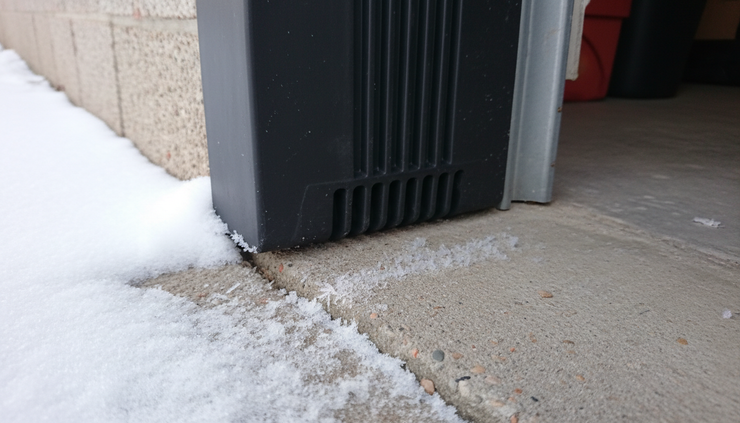
Moisture is one of the biggest seasonal challenges for Edmonton garage doors. Snow melts off vehicles, humidity rises inside the garage, and then temperatures drop again. That freeze-thaw cycle can affect seals, metal parts, and the concrete under the door.
Start at the floor. Keep the area where the bottom seal meets the concrete clean and dry. Sweep away snow before it freezes into a ridge. If the bottom rubber seal freezes to the floor, avoid forcing the opener. Use warm water sparingly or a safe ice-melting product around the threshold, then dry the area after.
Good products and tools for moisture control include:
A garage floor squeegee
Absorbent mats designed for winter runoff
A push broom
A small shovel for the door threshold
Silicone spray for rubber weather seals
Rust-inhibiting spray for suitable metal parts
Check ventilation too. If the garage often feels damp, open it briefly on mild dry days to let moisture escape. A small fan can help after washing the garage floor or parking a snow-covered vehicle inside.
Weatherstripping deserves special attention. Side and top seals should sit snugly against the door without creating too much friction. If daylight shows around the edges, cold air and moisture can get in. Replacing worn seals is a simple upgrade that can make the garage more comfortable and help protect stored items.
7. Build a regular maintenance schedule
Garage door care works best when it becomes routine. Waiting for a breakdown usually costs more time and stress than a few planned checkups.
A simple schedule can look like this:
Season | What to focus on |
Late winter | Clear ice, watch for noisy operation, check seals for cracking |
Spring | Wash panels, clean tracks, inspect rust, remove salt residue |
Summer | Check sensors, tighten visible hardware, inspect rollers and hinges |
Fall | Lubricate moving parts, test balance, prepare weatherstripping for cold |
Add reminders to your phone or calendar. Pair the task with something you already do, such as changing smoke detector batteries, cleaning gutters, or switching seasonal tires.
Keep a small garage door maintenance kit on a shelf so the job is easy to start. Include:
Silicone garage door lubricant
White lithium spray grease
Microfiber cloths
Work gloves
Flashlight
Nylon brush
Socket wrench set
Mild soap
Vacuum crevice attachment
Safety glasses
Most seasonal maintenance takes less than an hour when the door is in good shape. The payoff is a quieter door, fewer surprise issues, and a better chance of getting full life from the system.
Know when to call for help
Simple cleaning, inspection, and lubrication are safe for many homeowners. Some tasks should be left to a trained technician.
Call for service if you notice:
Broken or stretched springs
Frayed or loose cables
A door that feels extremely heavy
Gaps or bends in the tracks
A door that comes off track
A loud bang from the spring area
Repeated opener strain or failure
Safety reversal problems that do not improve after cleaning the sensors
These issues can be dangerous or can damage more parts if the door keeps operating. Stop using the door if it looks unstable or unsafe.
A little seasonal care goes a long way
Edmonton’s weather asks a lot from a garage door, but maintenance does not have to be complicated. Inspect the system, clean away grit and salt, lubricate the right parts, test the balance, protect against moisture, and keep a steady seasonal schedule.
The best time to maintain a garage door is before it gets noisy, stuck, or strained. Set a reminder for the next season change, gather a few basic tools, and give the door the attention it needs to keep working smoothly year-round.


Comments